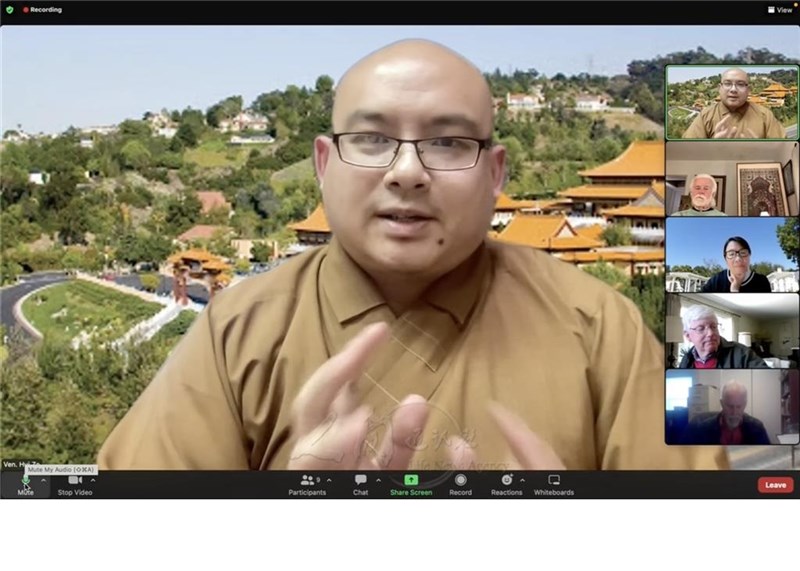
 Venerable Hui Ze of Hsi Lai Temple sais that all sentient beings can increase wisdom and naturally be able to treat others with compassion.photo/Hsi Lai Temple
"Dialogue Between Catholicism and Buddhism " was held online on April 13th, with a total of 9 participants discussing the importance of practicing compassion in various religions.
The organizer, Professor Michael Kerze at Los Angeles Valley College, stated that each religion has its own way of practice, and this discussion focuses on the position of "compassion" in their respective dogmas.
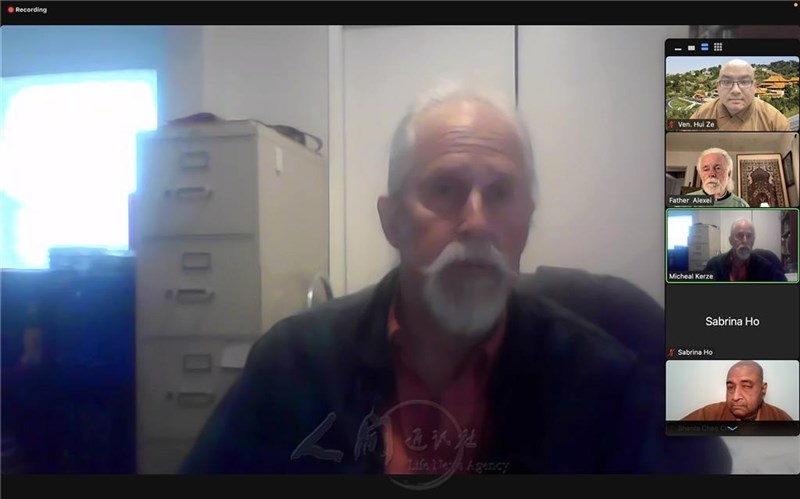 Professor Michael Kerze stated that this discussion focuses on "compassion".photo/Hsi Lai Temple
James Fredricks, a professor at Loyola Marymount University, explained that in Christianity, humans have been dead in sins since Adam's fall, and they have no ability to choose to do good on their own, but rather rely on God's grace to stir up their desire to do good. This is similar to how the Pure Land Buddhism believes that the sentient beings of the Dharma-ending age cannot attain enlightenment in Saha world, and must rely on the power of vow of Amitabha Buddha to be saved. Does this mean that Saha sentient beings cannot initiate compassion and do good on their own?
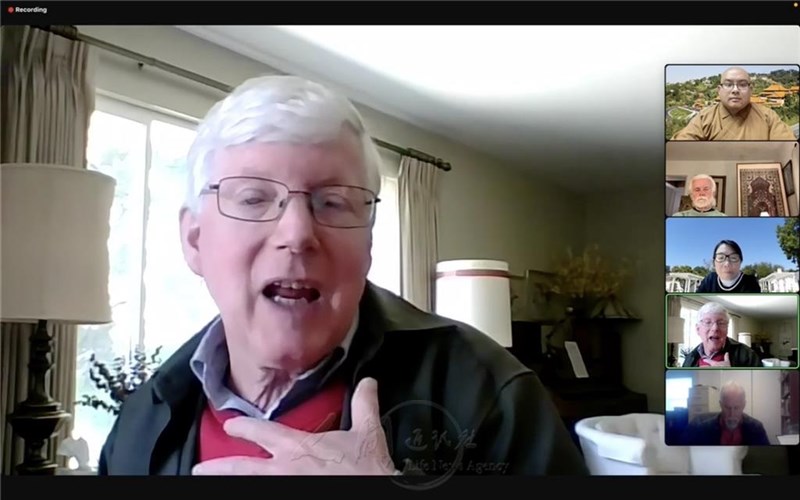 Professor James Fredricks said that humans rely on God's grace to stir up their desire to do good.photo/Hsi Lai Temple
Venerable Hui Ze of Hsi Lai Temple stated that when Buddha attained enlightenment under the Bodhi tree more than 2,500 years ago, he made a proclamation: "Wonderful, wonderful! All sentient beings possess the Tathagata's wisdom and virtue, but because of their delusive thoughts and attachments, they cannot realize it!" From this, it is known that all sentient beings inherently possess the Buddha’s mind and Buddha's nature, and if we can remove the ignorance, we will increase our wisdom and naturally be able to treat others with compassion!
Debra Boudreaux of the Buddhist Compassion Relief Tzu Chi Foundation said that Tzu Chi volunteers serve society through charitable work, developing everyone's compassion, and that charity work is equivalent to "Zen in motion".
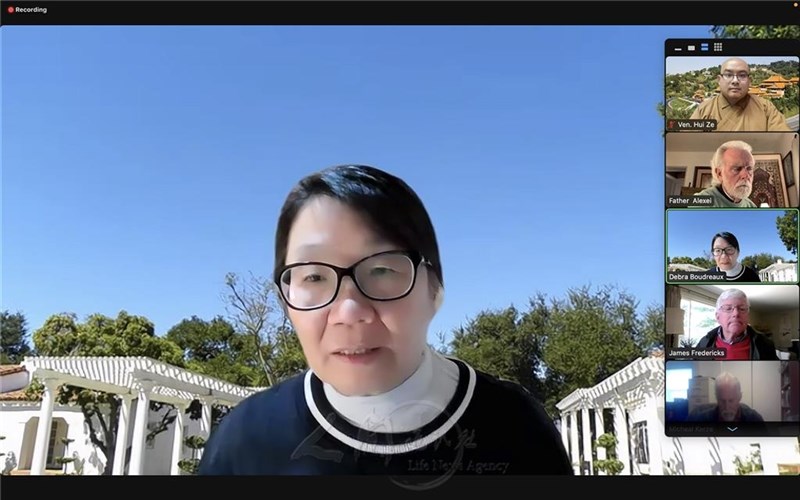 Debra Boudreaux of Tzu Chi Foundation said that charity work is equivalent to "Zen in motion".photo/Hsi Lai Temple
Susana Santana from the St. Vincent de Paul Society stated that Father St. Vincent taught us to see the poor and vulnerable communities we serve as our teachers, because they teach us how to serve all beings with humility and compassion.
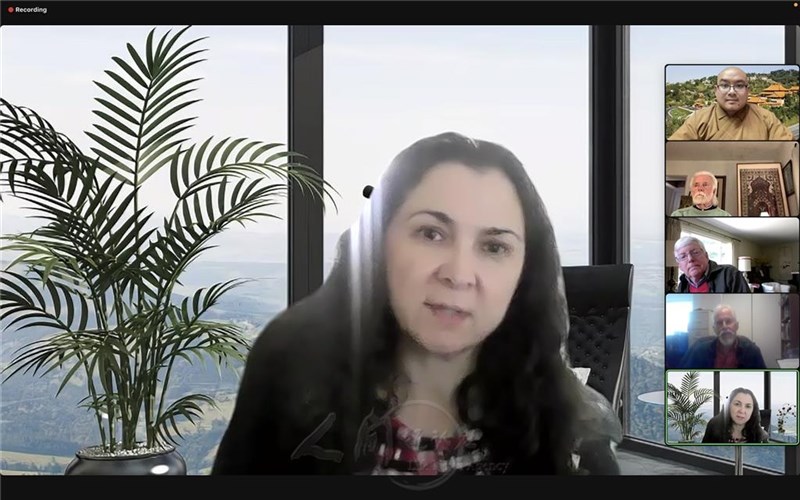 Susana Santana from the St. Vincent de Paul Society stated that Father St. Vincent taught us to see the poor and vulnerable communities we serve as our teachers.photo/Hsi Lai Temple
Venerable Chao Chu of Bodhi Temple explained that in Sanskrit, compassion is called Karuna, which means to make a vow to rescue sentient beings from suffering and lead them to happiness, not just to pity them. Compassion does not arise from pity, but from the courageous aspiration to save all beings, and it is not "excessive compassion". Therefore, the practice of compassion needs the assistance of wisdom in order to complete the perfect Buddhahood.
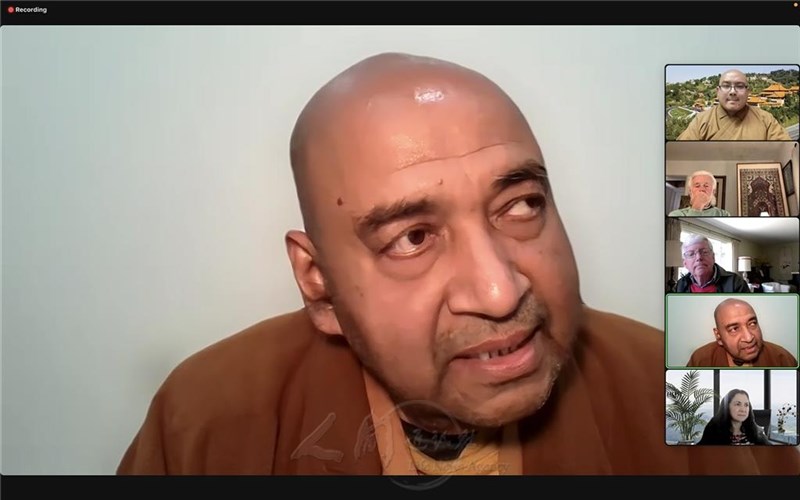 Venerable Chao Chu of Bodhi Temple explained that in Sanskrit, compassion is called Karuna, which means to make a vow to rescue sentient beings from suffering and lead them to happiness.photo/Hsi Lai Temple
Professor James Fredricks stated that Catholics believe that God created humans in His own image and that humans must follow the guidance of Jesus Christ to return to heaven. The example that Jesus Christ demonstrated in the world was one of compassion, therefore, practicing compassion is completing the practice of a Christian. Venerable Hui Ze stated that this view is similar to the teaching of Venerable Master Tai Xu in the early days of the Republic of China that "Buddhahood is attained the instant our characters are perfected," as Catholics also use compassionate behavior to return to the image of God.
Regarding the next meeting, convener Michael Kerze hopes that representives form each religion can provide practical examples to share with everyone based on the discussions about compassion in this meeting. Participants in the online discussion include representatives from various religions, including Father Alexei Smith from St. Andrew's Church of the Catholic Church, Michael Kerze, professor at Los Angeles Valley College, James L. Fredricks, professor at Loyola Marymount University, Susana Santana of the Holy Text Cooperative Association, Adrienne Hament of St. Ignatius Church, and Buddhist representatives including Venerable Abbot Chao Chu of Los Angeles Bodhi Temple,, Veberable Hui Ze of Hsi Lai Temple, Debra Boudreaux of the Tzu Chi Foundation, and Sabrina Ho.