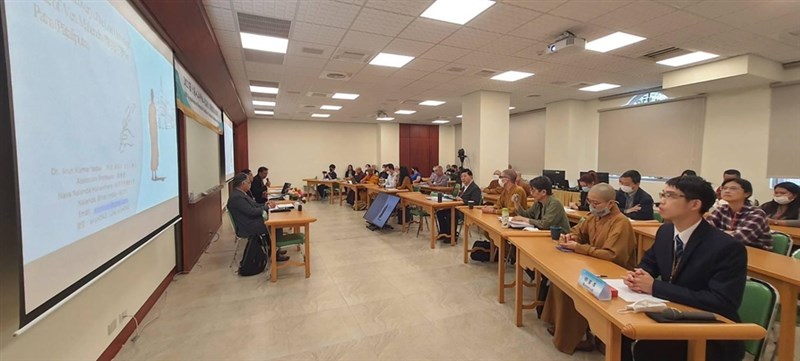
 The second half of the symposium features three panels on the connection between Humanistic Buddhism and ancient studies, social issues, and the future. photo/The Life News Agency
The Life News Agency
December 20, 2023
The 10th Symposium on Humanistic Buddhism, held by Fo Guang Shan Institute of Humanistic Buddhism, closed on Dec. 17. Titled “Humanistic Buddhism and the Future,” the three-day bilingual symposium which brought together 38 scholars from 12 countries and regions, ended with broader insights on Humanistic Buddhist ways of handling future issues.
1. Discussion Panels, Day Two
The second half of the symposium featured three panels on the connection between Humanistic Buddhism and ancient studies, social issues, and the future. The fourth panel, “Humanistic Buddhism and Ancient Studies,” opened with an archeological research by Arun Kumar Yadav, Assistant Professor of the Department of Pali at Nava Nalanda Mahavihara, Deemed University. Through the recently-discovered ancient hermitage place of the Buddhist sage Mahendra in Patna, Yadav expounded the significance of the finding. Prof. Ghani-ur-Rahman, Director of Regional Integration Centre at Quaid-i-Azam University, spoke about how bodhisattvas are the major inspiration for Humanistic Buddhism from the perspective of Gandharan Buddhist Civilization in Pakistan.
In the fifth panel, “Humanistic Buddhism and Social Issues,” Shun-Man Simon Ho, President of The Hang Seng University of Hong Kong, examined the current ESG (environment, social and governance) reporting mechanism, presenting a new ESG model based on the Integrated Conceptual Framework of Responsible Management. Magali Goirand, Director of Systemics Development Associates, explained the contribution of Humanistic Buddhism to implementing ethics in medical AI, emphasizing that Humanistic Buddhism is able to stimulate the development of AI. Nathan Jishin Michon, Interfaith Minister at Ryukoku University, explored compassion from various dimensions, bringing up the disadvantages of unhealthy dynamics of compassion, while looking at compassion from both Buddhist and psychological point of view. Rana Purushottam Kumar Singh, Dean of Buddhist Studies at Nava Nalanda Mahavihara, Deemed University, explained the influence of Buddhist attitude to human values, as well as its relevance to contemporary India.
The sixth panel focused on “Humanistic Buddhism and the Future.” Bee Scherer, Professor of Buddhist Studies and Rector of Buddhist Seminary at Vrije Universiteit Amsterdam, described a future of no-self. Scherer invited the audience to ponder “what kind of futures might need to be imagined,” while examining the question from viewpoints such as ecology, impermanence and interbeing, interfaith, and social justice. Jens Reinke, Assistant Professor of Buddhist Studies at Buddhist Seminary, Faculty of Religion and Theology, VU Amsterdam, connected the past and the future with appreciation and compassion.
2. Cultivating Compassion: Going Beyond Crises launches
The symposium also featured a book launch for Cultivating Compassion: Going Beyond Crises. The book, edited by Venerable Juewei, Suzanne Franzway, and Stephen Hill, is an anthology of the proceedings of the Eighth International Symposium on Humanistic Buddhism held in 2020. In response to the global Covid-19 pandemic, the theme of that iteration of the symposium was “Humanistic Buddhist Responses to Modern Crises.” The newly-published book builds on conversations from that symposium and features 17 chapters in three parts by scholars and experts who discuss compassion from a plethora of perspectives and its applications in different fields.
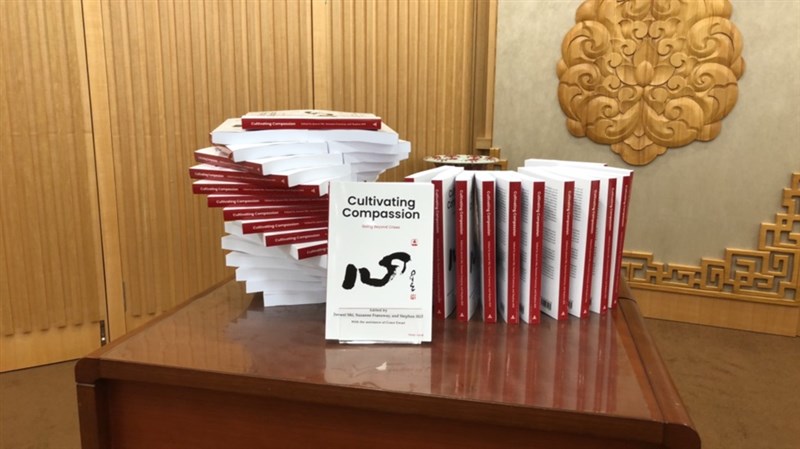 The symposium also features a book launch for Cultivating Compassion: Going Beyond Crises. The book, edited by Venerable Juewei, Suzanne Franzway, and Stephen Hill, is an anthology of the proceedings of the Eighth International Symposium on Humanistic Buddhism held in 2020. photo/The Life News Agency
3. Forum: The Theory and Practice of Humanistic Buddhism
Kuo Chao-Shun, Dean of the College of Buddhist Studies at Fo Guang University, facilitated a forum on “The Theory and Practice of Humanistic Buddhism” on the evening of Dec. 16. In the forum, Venerable Miao Guang, Deputy Chancellor of Fo Guang Shan Institute of Humanistic Buddhism and Director of the Institute’s Center of International Affairs, briefed the audience on the current state of translation projects in Fo Guang Shan’s global Dharma propagation. Venerable Miao Le, Abbess of Fo Guang Shan Nan Ping Temple, discussed case studies of how Venerable Master Hsing Yun’s ideal of “turning temples into schools” occurs in the real world. Finally, Venerable Miao You, Head Abbess of Fo Guang Shan South America, shared her experiences with localizing Humanistic Buddhism overseas. The audience departed for the evening with novel insights on the theory, practice, and realization of Humanistic Buddhism.
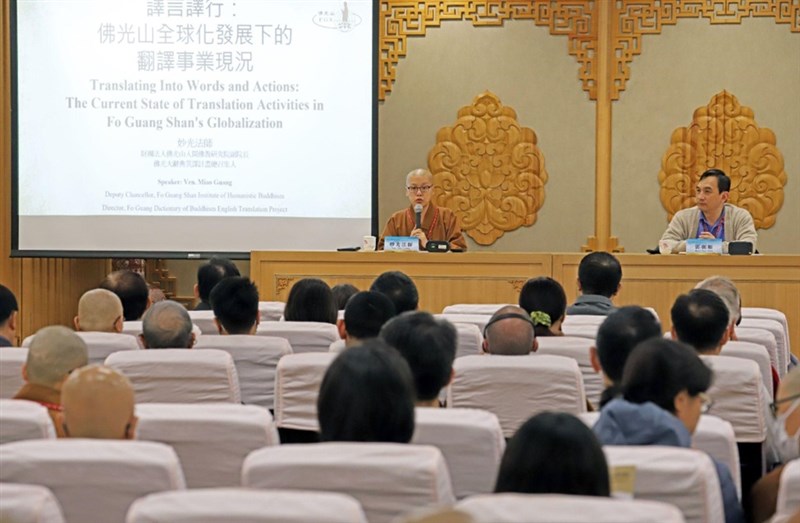 Kuo Chao-Shun, Dean of the College of Buddhist Studies at Fo Guang University, facilitates a forum on “The Theory and Practice of Humanistic Buddhism” on the evening of Dec. 16. photo/The Life News Agency