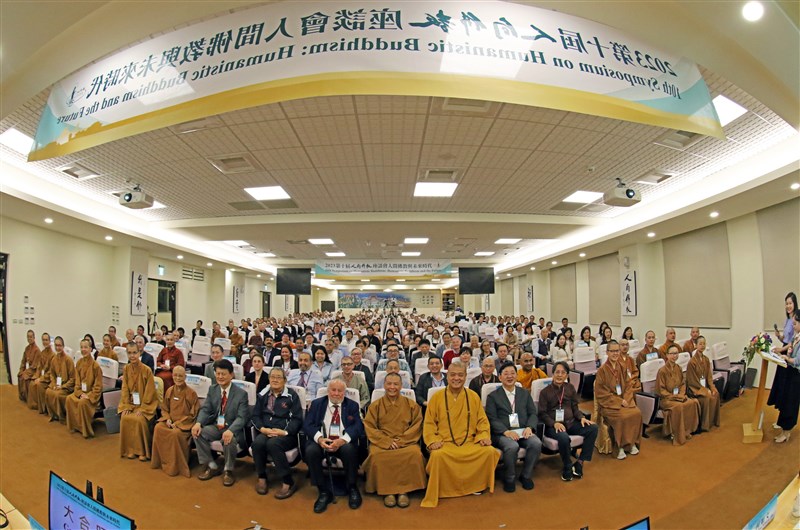
 The 10th International Symposium on Humanistic Buddhism, organized by Fo Guang Shan Institute of Humanistic Buddhism, begins on Dec. 15, 2023 at Fo Guang Shan Monastery in Kaohsiung Taiwan. photo/The Life News Agency
The Life News Agency
December 20, 2023
The 10th International Symposium on Humanistic Buddhism, organized by Fo Guang Shan Institute of Humanistic Buddhism, begins on Dec. 15, 2023 at Fo Guang Shan Monastery in Kaohsiung Taiwan. The three-day bilingual symposium brought together 38 scholars from 12 countries and regions to discuss “Humanistic Buddhism and the Future” and will continue until Dec. 17, 2023.
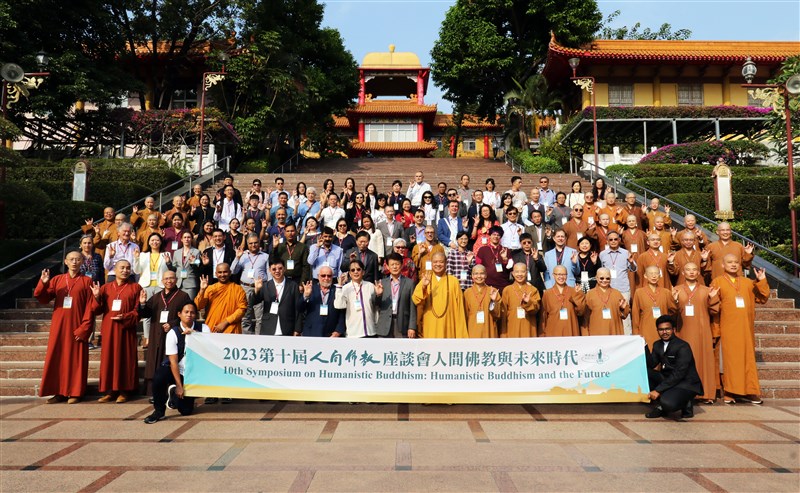 The three-day bilingual symposium bring together 38 scholars from 12 countries and regions to discuss “Humanistic Buddhism and the Future” and will continue until Dec. 17, 2023. photo/The Life News Agency
1.Keynote Speeches
In its two keynote speeches, the symposium introduced the audience to new insights on the varying roles Humanistic Buddhism plays in both a monastic and lay context. In “The Future Prospect of Education for Clergy in Humanistic Buddhism,” Wan Chin-chuan, professor and director of Department of Buddhist Studies, Fo Guang University, proposed possibilities for the future of monastic education.
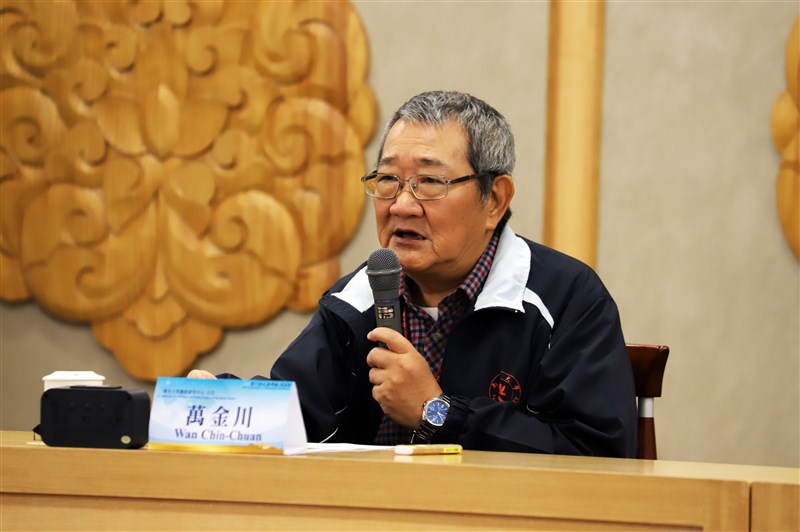 In “The Future Prospect of Education for Clergy in Humanistic Buddhism,” Wan Chin-chuan, professor and director of Department of Buddhist Studies, Fo Guang University, proposes possibilities for the future of monastic education. photo/The Life News Agency
The second keynote, “Living with Impermanence: The Path to a Positive Future” by Stephen Hill, Emeritus Professor of Sociology at the University of Wollongong, proposed Humanistic Buddhist teachings on impermanence as a way to face current and upcoming challenges to humanity as a whole.
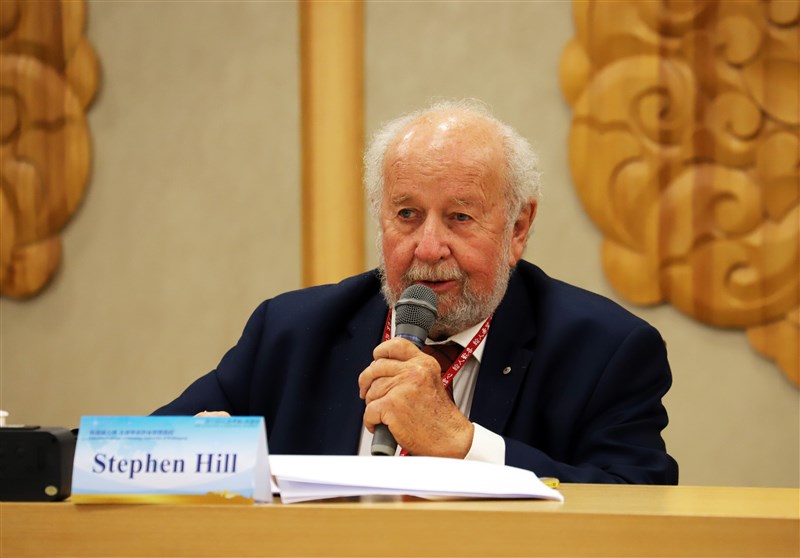 The second keynote, “Living with Impermanence: The Path to a Positive Future” by Stephen Hill, Emeritus Professor of Sociology at the University of Wollongong, proposes Humanistic Buddhist teachings on impermanence as a way to face current and upcoming challenges to humanity as a whole. photo/The Life News Agency
2.Discussion Panels on Various Fields of Studies
The first three English panels focused on Humanistic Buddhism's philosophy, education, and perspectives on interconnectedness. Together, the panels concentrated on how Humanistic Buddhism is deeply tied to the future welfare of the world. In the first panel, Kenneth Holloway, Associate Professor at Florida Atlantic University, began with the early philosophical history of Humanistic Buddhism. Hsiao-Lan Hu, Professor of Religious Studies at the University of Detroit Mercy, emphasized the importance for Humanistic Buddhism to reach out to those who have not been treated as “humans.” Hu stated the need to seriously consider the voices and input of oppressed groups in examining and changing the socially embedded mechanisms which facilitate their marginalization. Quoting the Buddhist scriptures such as the Aṣṭasahasrikā Prajñāpāramitā and Bodhicāryavatāra, Miroj Shakya, Associate Professor and Chair of the Department of Religious Studies of the University of the West, examined the notion of bodhicitta or bodhi mind in connection to Humanistic Buddhism.
In the second panel, “Humanistic Buddhism and Education,” Bruce McKenzie, founder of Systemics Development Associates, explained how an online Humanistic Buddhism course during the Covid-19 pandemic used a contemplative pedagogy to convey the ethos of Nan Tien Institute (NTI). Michael Tan, President of Guang Ming College, elaborated on how education serves as a platform for the development of Humanistic Buddhism in the Philippines. Cecile Manikan, Director of the Humanistic Buddhism Center of the Philippines, offered an assessment of the impact of the Three Acts of Goodness program to education in the Philippines. Josette Balandra, a fellow from the Philippines Department of Education–Division of Sagay City Education Program, presented the history and current development of the Three Acts of Goodness program of Sagay City.
The third panel, “Humanistic Buddhism and Interconnectedness,” featured three presentations. The first was a presentation on the 2021 US memorial event “May We Gather” by Funie Hsu, Associate Professor of American Studies at San Jose State University. The event, responding to the 2021 Atlanta spa shootings, highlighted Humanistic Buddhism’s call to “enter the world” as critical in addressing contemporary sufferings. Stefania Travagnin, Reader at SOAS, University of London, shared her insights on the bodhisattva path and inclusivity through Buddhist examples of trans-faith humanitarianism. Xinying Tracy Liu, Ph.D. candidate at Cambridge University, explained the Humanistic Buddhist concept of “giving” from the anthropological perspective.
3.Book Launch for Cultivating Compassion: Going Beyond Crises
The three-day symposium features six panels: The philosophy of Humanistic Buddhism, Humanistic Buddhism and education, interconnectedness, ancient studies, social issues, and the future. Simultaneous Chinese-English interpretation is provided for the opening ceremony, keynote speech, book launch for Cultivating Compassion: Going Beyond Crises edited by Venerable Juewei, Suzanne Franzway, and Stephen Hill—an anthology of the proceedings of the Eighth International Symposium on Humanistic Buddhism, the forum “The Theory and Practice of Humanistic Buddhism,” general discussion and closing ceremony.
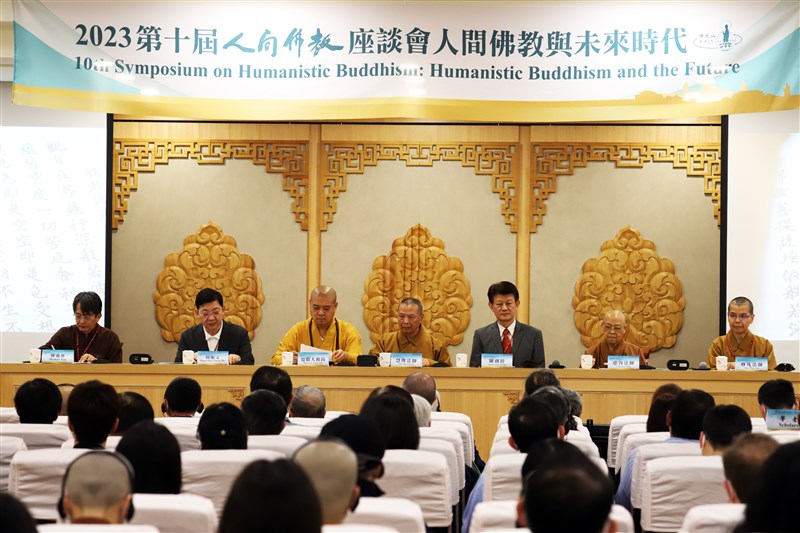 The three-day symposium features six panels: The philosophy of Humanistic Buddhism, Humanistic Buddhism and education, interconnectedness, ancient studies, social issues, and the future. photo/The Life News Agency
Symposium website: https://hbsymposium.fgsihb.org/en/
Observer registration: https://reurl.cc/gaLpRb