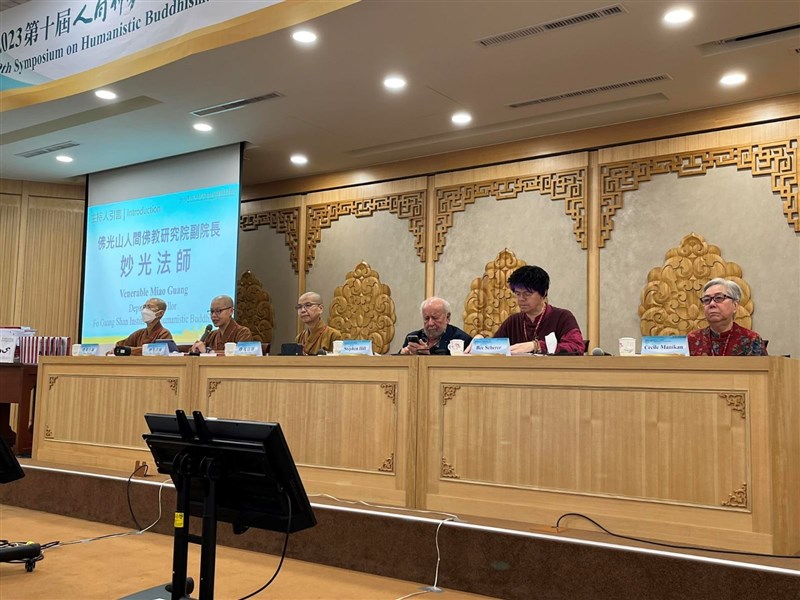
 Scholars participate in the English panels of “2023 10th Symposium on Humanistic Buddhism: Humanistic Buddhism and the Future” at Fo Guang Shan Monastery Kaohsiung, Taiwan. photo/The Life News Agency
Lourdes Lim Wang
December 19, 2023
December 15 to 17, scholars from the Philippines participated in the English panels of “2023 10th Symposium on Humanistic Buddhism: Humanistic Buddhism and the Future” at Fo Guang Shan Monastery Kaohsiung, Taiwan. The agenda topics for the panels consist of “The Philosophy of Humanistic Buddhism”, “Humanistic Buddhism and Education”, “Book Launch: Cultivating Compassion: Going beyond Crises”, “Humanistic Buddhism and Coexistence”, “Humanistic Buddhism and Ancient Studies”, “Humanistic Buddhism and Social Issues” and “Humanistic Buddhism and the Future”.
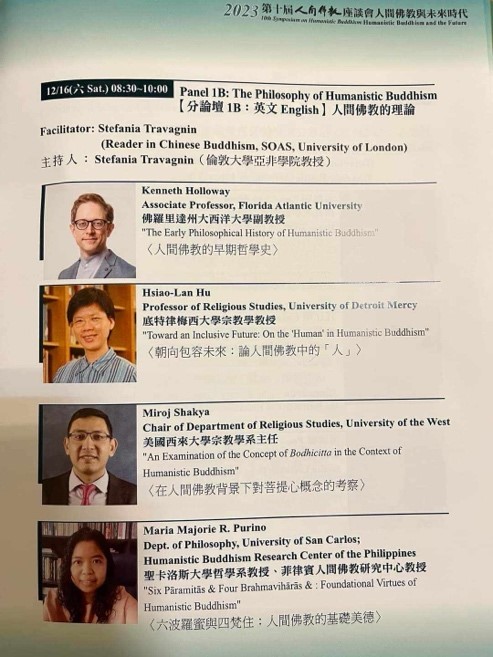 The agenda topics for the panels consist of “The Philosophy of Humanistic Buddhism”, “Humanistic Buddhism and Education”, “Book Launch: Cultivating Compassion: Going beyond Crises”, “Humanistic Buddhism and Coexistence”, “Humanistic Buddhism and Ancient Studies”, “Humanistic Buddhism and Social Issues” and “Humanistic Buddhism and the Future”. photo/The Life News Agency
Scholars who participated from the Philippines were: Dr. Michael Tan, the President of FGS Guang Ming College and at the same time the Professor Emeritus at the University of the Philippines Diliman; Dr. Cecile B. Manikan, the Director of the Humanistic Buddhism Center in the Philippines; Dr. Maria Majorie R. Purino, professor at San Carlos University Department of Philosophy, Cebu; Dr. Josette P. Balandra, Senior Education Program Specialist for Social Mobilization and Networking at DepEd Division of Sagay City.
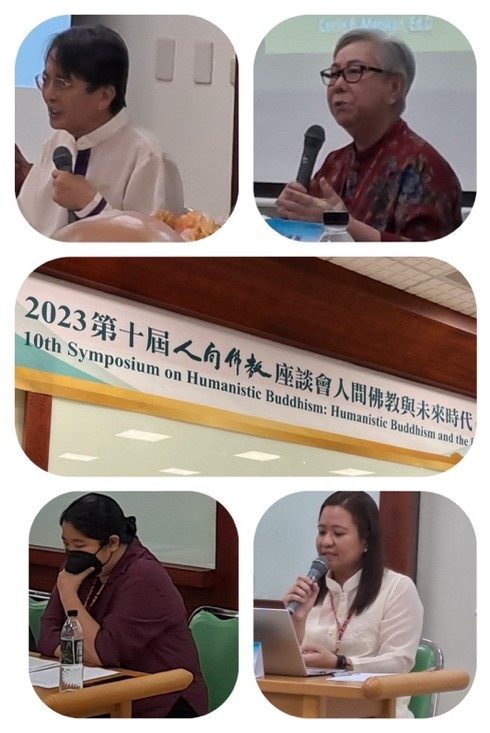 Scholars who participate from the Philippines were: Dr. Michael Tan, the President of FGS Guang Ming College and at the same time the Professor Emeritus at the University of the Philippines Diliman; Dr. Cecile B. Manikan, the Director of the Humanistic Buddhism Center in the Philippines; Dr. Maria Majorie R. Purino, professor at San Carlos University Department of Philosophy, Cebu; Dr. Josette P. Balandra, Senior Education Program Specialist for Social Mobilization and Networking at DepEd Division of Sagay City. photo/The Life News Agency
Dr. Michael Tan in his topic “Kusà: Volition and Ethics for Education in the Philippines”, talked about how Fo Guang Shan-supported Guang Ming College (GMC), students are learning about humanist Buddhist ethics not so much as an academic activity but through integrated package that runs through daily life activities and experiences. He said Buddhists in the Philippines represent only about 0.09% of the total population but Buddhism is attracting more people who see it as a philosophy and guide for living. Humanist Buddhism in particular has an opportunity to help improve people’s lives in the Philippines through the educational system, without imposing itself as a religion. This is particularly the case for ethics.
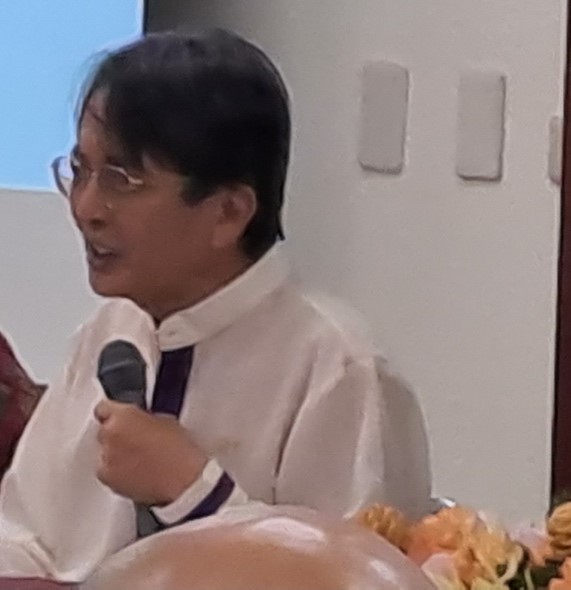 Dr. Michael Tan in his topic “Kusà: Volition and Ethics for Education in the Philippines”, talks about how Fo Guang Shan-supported Guang Ming College (GMC), students are learning about humanist Buddhist ethics not so much as an academic activity but through integrated package that runs through daily life activities and experiences. photo/The Life News Agency
He further shared that in GMC, instead of disciplinary codes and handbooks, they have introduced an ethical code based on humanist principles (mainly respect and dignity for all humans, and developing full human potentials) and the Buddhist Five Precepts (Pancasila). This perspective moves away from punitive (punishment) measures toward alternative dispute settlements and restorative justice. He emphasized how students are encouraged to be reflective in daily life and activities, which are transformed into “ethical exercise and conditioning” with mindfulness. Examples of activities include silent meals, “dancing with the ball” in sports and , most importantly, community immersion activities.
With this integrated system, he elaborated the Filipino value of “kusà”, that being good happens not because of a fear of punishment or an expectation of rewards but because it’s “good to be good” and at the core is kusà, a Filipino term that emphasizes volition. He gave examples of how the college environment generates kusà, drawing from and feeding into compassion (metta) with discernment (wisdom, karuna). Using dependent origination as a framework, he discussed both hindrances and facilitating factors in this process of developing a kusà ethos that localizes humanist Buddhism.
Dr. Cecile Manikan conducted a thorough interview and deep research on how the “Three Acts of Goodness (TAG) School Program” impacted Sagay City. The title of her paper is “TRANSFORMING WHILE BEING TRANSFORMED...” – A Grounded Theory on the Impact of “The Three Acts of Goodness” as a Moral Framework in Philippine Education.
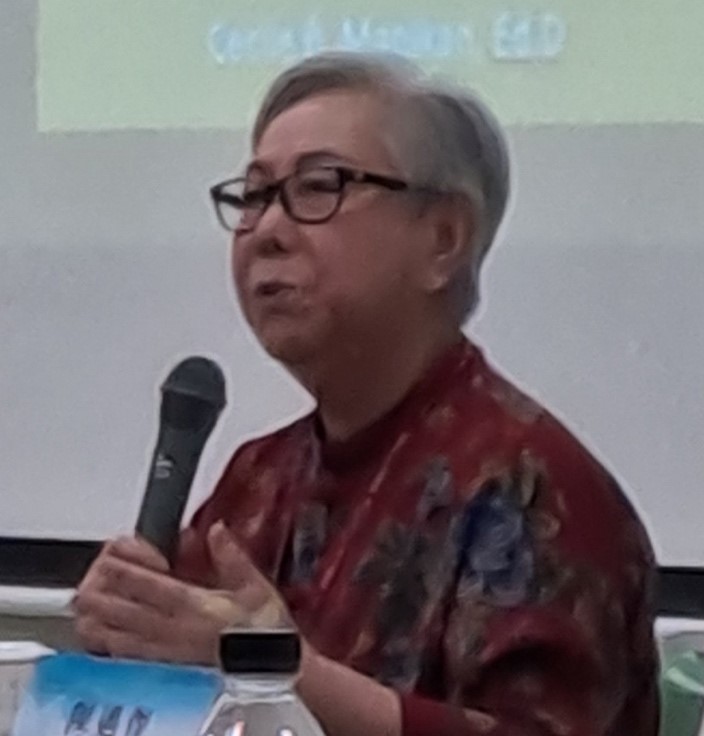 Dr. Cecile Manikan conductes a thorough interview and deep research on how the “Three Acts of Goodness (TAG) School Program” impacted Sagay City. The title of her paper is “TRANSFORMING WHILE BEING TRANSFORMED...” – A Grounded Theory on the Impact of “The Three Acts of Goodness” as a Moral Framework in Philippine Education. photo/The Life News Agency
She said that her paper is a grounded theory on the effectiveness of “The Three Acts of Goodness” (TAG) as a moral framework in SDO Sagay City, her study probes into the inner experiences of three sets of respondents – Teachers, Children, and Parents – to determine TAG’s impact as a vehicle for self and societal transformation.
Contents of Dr. Manikan’s research include the background, aim and purpose of the study as the introduction. She used purposive sampling, respondents and multiple data collection, the process of evolving theory from data and analytical framework for her methodology of the study. Her results and discussion are in the following categories: Case A: Categories of Teachers’ Responses Case B: Categories of Children’s Responses Case C: Categories for Parents Response; where she elaborated on the selective coding, formulating the theory, writing the theory and finally the conclusion.
Dr. Manikan has an appendix on the very convincing figure page which contains: Figure 1. Steps and Stages of Evolving Theory from the Ground, Figure 2. Analytical Framework of Grounded Theory, Figure 3. Axial Coding of Teachers’ Responses, Figure 4. Axial Coding for Questions 1 and 2 for Children, Figure 5. Axial Coding of Parents’ Responses, Figure 6. Sample of the Coding Process from Transcripts to Open Coding to Axial Coding for Case A Responses, Figure 7. The Process of Selective Coding, Figure 8. Defining the Emergent Theory and its Major Categories, Figure 9: Categories for “Most Unforgettable” TAG Experiences, Figure 10. Formulating the Theory in Answer to the Research Questions.
Dr. Maria Majorie Purino shared “Six Paramitas and Four Brahmaviharas: Foundational Virtues of Humanistic Buddhism” as her topic of study. She first introduced Buddhist ethics as one of the three pillars of the Buddhist path, the values and virtues which continue to guide the conduct of some 350 million Buddhists around the world (Keown 2005). Then she looked into how we think about Buddhist ethics in our modern times and defined the different normative theories such as deontological, teleological and virtue ethics. After briefly tracing the origins of virtues from the East & West, she revisited the Six Perfections (pāramitās) or the virtues of the Bodhisattva as well as the Four Divine Immeasurables (brahmavihārās). These core Mahayana teachings are important components in the modern movement within Buddhism known as Humanistic Buddhism.
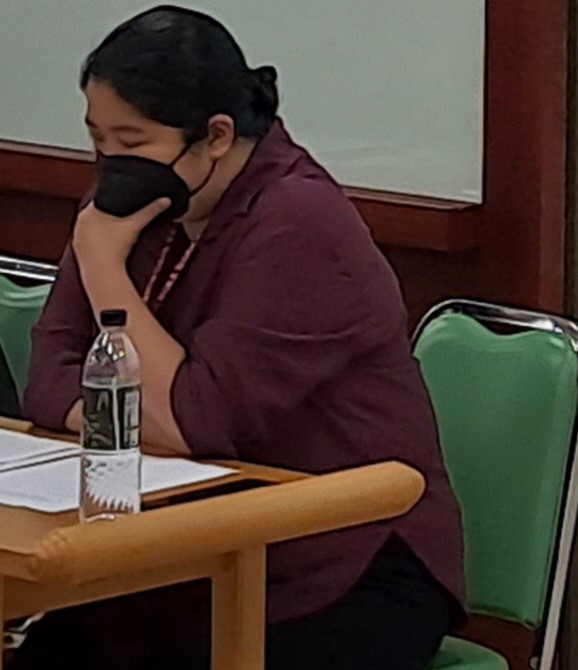 Dr. Maria Majorie Purino shares “Six Paramitas and Four Brahmaviharas: Foundational Virtues of Humanistic Buddhism” as her topic of study. photo/The Life News Agency
Focus of Dr. Purino's research paper is on the brand of Humanistic Buddhism propagated by Hsing Yun (1927-2023). From Aristotle & the Buddha on the Virtues, Pāramitās, Brahmavihārās, Fink’s Defense of the Virtues, to Humanistic Buddhism. She concluded that the practice of Humanistic Buddhism can be seen as act-centred in the sense that it primarily advocates the Three Acts of Goodness. Doing good deeds, speaking good words, and thinking good thoughts, are not just instrumentalist directive towards a teleological goal, rather it is the good in themselves. Its cultivation if done authentically is free from egoistic and anthropocentric means. It is impartial and applies to all sentient beings. This is the value of the three acts of goodness, it is very subtle but its ability to transform our actions to benefit others is very potent. This is the vision of Hsing Yun, to propagate goodness to change the world for the better, and we are all invited to be part of this transformation.
In summation, Dr. Purino pointed out that Hsing Yun’s Humanistic Buddhism as a modern movement within Buddhism is anchored on the core ethical foundation which are the virtues of the Bodhisattva and the four divine immeasurables. Humanistic Buddhism seeks to help those who are marginalized, and those who need help the most in the here and now. Humanistic Buddhism is an evolution within traditional Buddhism. She shared Hsing Yun’s vision for Humanistic Buddhism in our modern reality: in order for Buddhism to stay relevant with the times, Buddhism must also evolve itself and learn to reinvent. Such is the emergence of Humanistic Buddhism. Humanistic Buddhism relates to virtue ethics as it is altruistic, agent-neutral, and is aware of doing good rather than just being good. Humanistic Buddhism puts into practice the Buddhist virtues.
Dr. Josette Balandra spoke on “Humanistic Buddhism -A Reminder, A Way of Life: At the Lens of an Educator”, the TAG Before, Today and in the Future. She shared the experiences of DepEd in Sagay City before and after TAG was implemented. The Department of Education Schools Division Office of Sagay City, Philippines has been implementing for seven (7) years in partnership with the Fo Guang Shan Foundation, a unique program known as the Three Acts of Goodness (TAG). This is a way of integrating and promoting personal growth, social harmony, and the well-being of the learners. It encourages individuals to cultivate compassion, wisdom, and ethical conduct and to engage in acts of kindness and service to others.
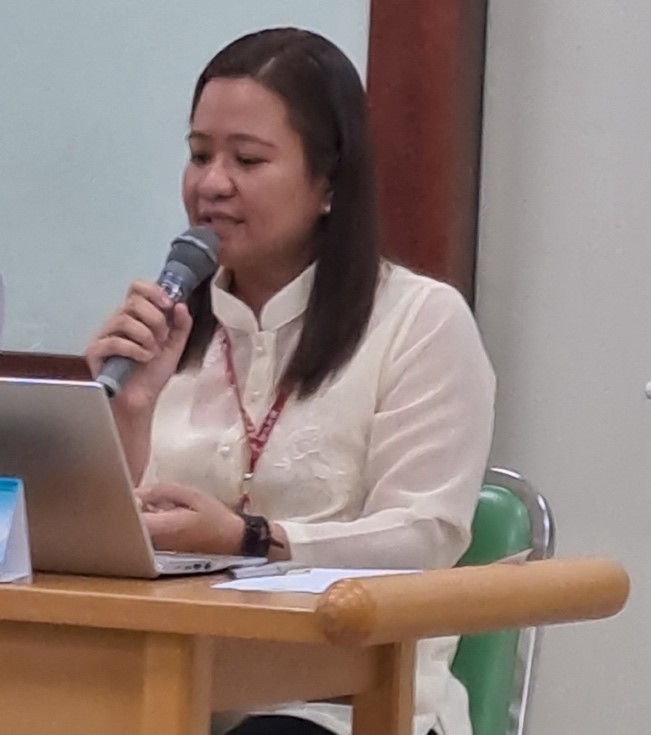 Dr. Josette Balandra speals on “Humanistic Buddhism -A Reminder, A Way of Life: At the Lens of an Educator”, the TAG Before, Today and in the Future. photo/The Life News Agency
TAG Advocacy is a way to improve the psychosocial skills of learners to gain more confidence and become more respectful, helpful, and caring. We lived with the wisdom of Venerable Master Hsing Yun in propagating the TAG program to advocate the virtues of Doing Good Deeds, Speaking Good Words, and Thinking Good Thoughts. The Three Acts of Goodness (TAG) program aims to encourage schools to hone learners into holistic and noble citizens through the implementation of school-based value-driven activities to mould learners' character and improve their well-being. But how did Sagay City do its best in propagating the TAG in all its Schools or in making 100% of their schools implement the TAG program? Dr. Balandra talked in detail about the process of transformation in her study.
Before TAG: In School Year 2016, SDO Sagay City was challenged in many areas in the task of governance. The Department of Education’s Central Office mandated that all schools must be compliant with the comprehensive Water, Sanitation, and Hygiene in Schools (WINS) Program (DepEd Order No. 10, s. 2016.) During this year, SDO Sagay surveyed to monitor the status of compliance with this DepEd Order. The result showed that 0% of the schools are compliant with the planning standard of the 3-Stars WINS Program. Further, the alarming cases rate of bullying specifically, the physical, sexual, social, psychological, early pregnancy, and incest was also alarming during this year. Based on the report submitted by the schools in the Division of Sagay City through its Values Education and Child Protection Program Unit there were child abuse cases reported.
After TAG: With these perceived problems, Dr. Balandra proposed the “PanaTAG: A Movement for Learning Environment Improvement”, which aims to address the gaps in the provision of opportunity to all schools to acquire additional funding through a Partnership that will address the common problem of the schools of “no availability of funding” in establishing, construction and acquiring facilities. Likewise, to teach the school community (teacher, students, and parents) a way of life to achieve self and societal transformation through the purification of actions, thoughts, and speech through the institutionalization of the Three Acts of Goodness program (TAG) in school which aims to minimize bullying cases by doing Good Deeds, speaking Good Words and thinking Good Thoughts.
It was her initiative to strengthen the partnership engagements of the schools by tapping stakeholders like the Fo Guang Shan Foundation (FGS) which has the potential to fund their proposed projects. A program or project that will hone learners into holistic and noble Filipino youth through the implementation of school-based value-driven programs, and projects to mold their character and improve their well-being through TAG.
Sowing the seeds of goodness is a beautiful journey. DepEd Sagay City vowed to integrate this life-changing and societal transformative teaching initiative dubbed TAG. Dr. Balandra admired the wisdom of Ven. Master Hsing Yun, focuses on helping the schools and the youth to respond to the dire needs of the schools in different categories such as Infrastructure and School design development, Student, Teacher, and staff welfare and development, and community engagement programs paved the way in inculcating kindness and compassion among learners and teachers.
Thus, she concluded that Implementing the TAG programs remarkably changed SDO Sagay in encouraging young people. To build positive relationships, raising awareness of different cultures in the community. Supporting local schools in achieving their school values and reinforcing the concept of connectedness in the community. Humanistic Buddhism rallies DepEd Sagay to the realization of the innate goodness in everyone. That enlightenment, peace, and true happiness are within our reach if only we will follow the noble path of doing good, speaking good, and thinking good at all times. Through the wisdom of Venerable Master Hsing Yun, doing good and being kind becomes a way of life.
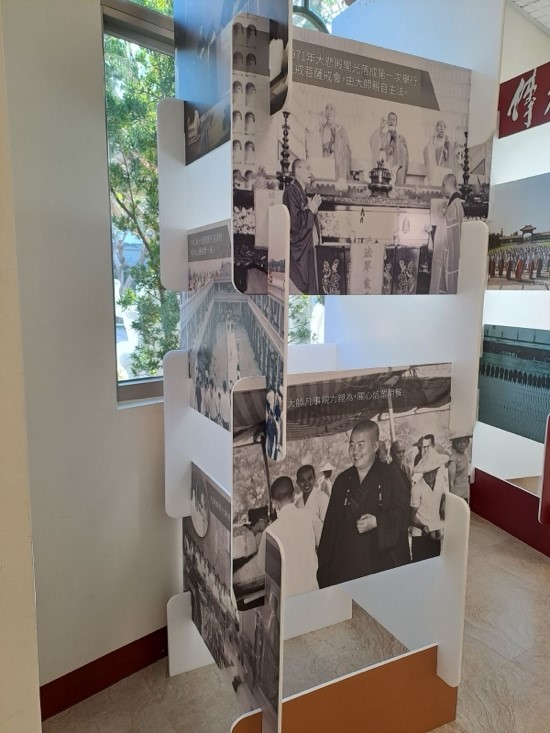 That enlightenment, peace, and true happiness are within our reach if only we will follow the noble path of doing good, speaking good, and thinking good at all times. Through the wisdom of Venerable Master Hsing Yun, doing good and being kind becomes a way of life. photo/The Life News Agency