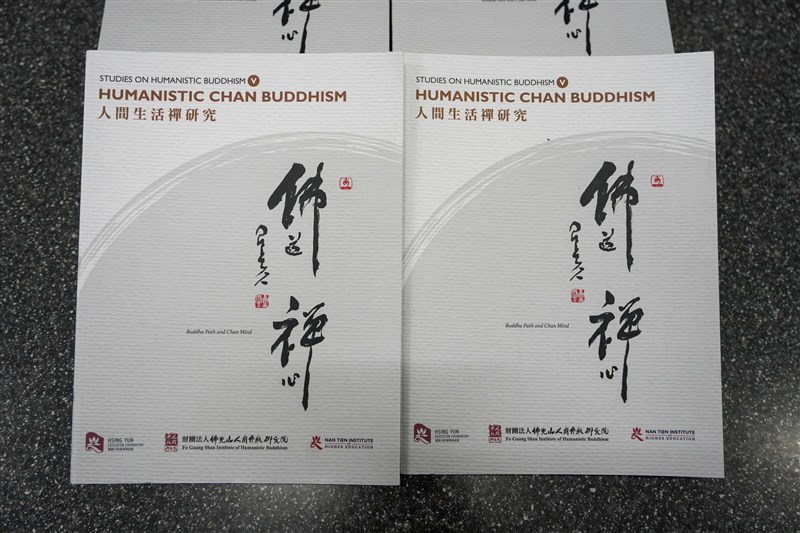
 The theme of the new issue of Humanistic Buddhism journal is "Humanistic Chan Buddhism, particularly Fo Guang Chan as developed by the late Venerable Master Hsing Yun.” photo/The Life News Agency
Pema Duddul
September 21, 2023
The Studies on Humanistic Buddhism journal produced by the Humanistic Buddhism Centre in Wollongong, Australia, has released a new issue in September 2023.
The journal is co-published by Fo Guang Shan Institute of Humanistic Buddhism and Nan Tien Institute in Australia and supported by a grant from the Hsing Yun Education Foundation.
The journal editor, Dr. Michael Murphy, described the theme of the new issue as “Humanistic Chan Buddhism, particularly Fo Guang Chan as developed by the late Venerable Master Hsing Yun.”
Chan is the Chinese form of what in English is widely known as Zen. Chan predates Zen by a few centuries and, indeed, Zen is the Japanese word for Chan.
According to Dr. Murphy, Venerable Master Hsing Yun saw Chan “as an important antidote for the feeling that contemporary life is meaningless and full of anxiety.”In other words, Humanistic Chan Buddhism is engaged with the everyday concerns of modern people living in increasingly complex and challenging times.
The new issue (volume five) of Studies on Humanistic Buddhism contains eight articles translated from Chinese, one article that was written in English, and four papers by postgraduate students. One of the articles in this new issue, by Venerable Dr. Jue Wei, outlines the ways the late Venerable Master Hsing Yun's book The Rabbit’s Horn: A Commentary on the Platform Sutra deftly reinterpreted the Platform Sūtra, a classic of Chan literature, for contemporary readers.
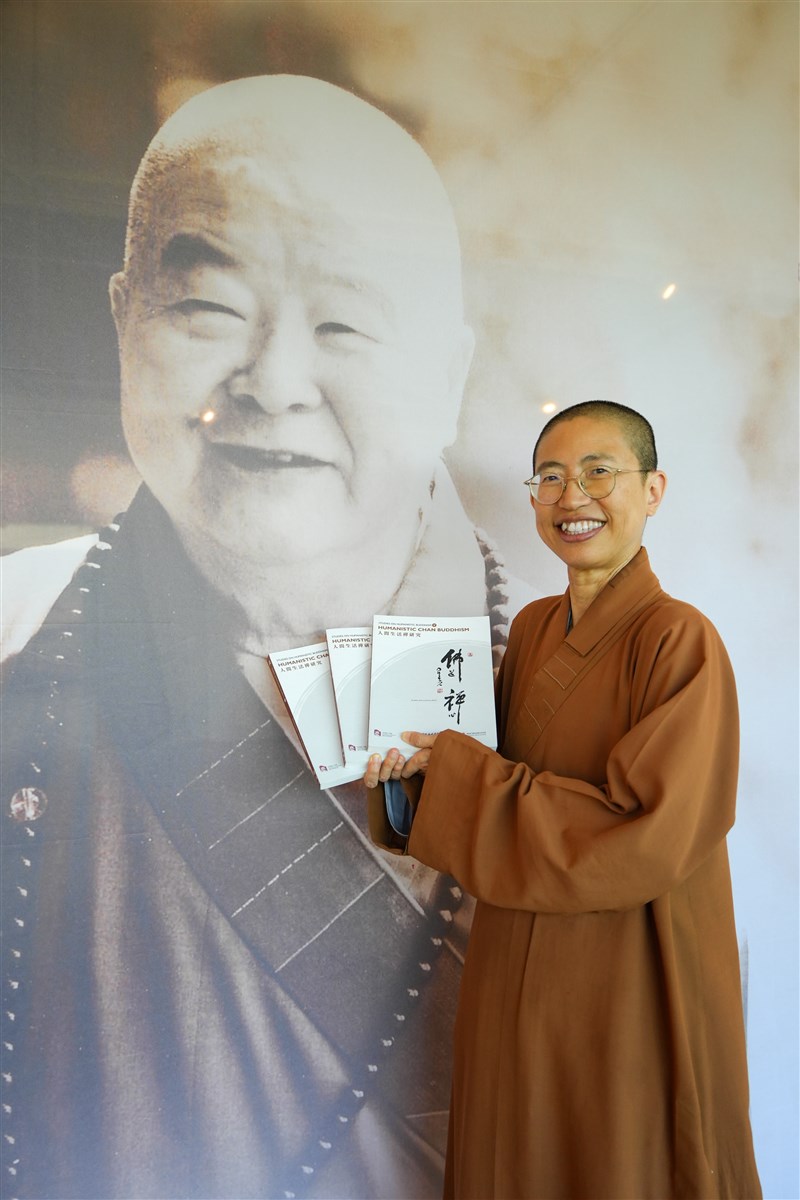 Venerable Jue Wei, the director of the Humanistic Buddhism Center of Nan Tien Institute in Australia, took a photo in front of the poster of Venerable Master Hsing Yun. photo/The Life News Agency
In her article Venerable Dr. Jue Wei describes Chan as “a Chinese interpretation of Indian Buddhist humanism, changing the emphasis from other-worldliness to this-worldliness." This change from other-worldliness to this-worldliness is one of the foundational concepts of Humanistic Buddhism, as taught by the Venerable Master Hsing Yun. This shift to the here-and-now and day-to-day concerns of modern life has reinvigorated Buddhism in China and across the globe. Even so, this does not mean that Humanistic Buddhism is focused on worldly things.
The preface of the volume makes this very clear by ending with these inspiring words from Venerable Master Hsing Yun: “Chan practitioners think that we should understand the mind and see intrinsic nature. Chan practitioners see inherent nature as neither in motion nor still, neither arising nor ceasing, not coming or going, and not right or wrong. Chan masters do not fear life and death, but see life and death as a game. Chan masters look lightly upon life and death and do not worry. This is liberation. Even though a Chan practitioner’s body may die, his Dharma body, wisdom life, true mind, and intrinsic nature will live in the world forever.”
Volume 5 of Studies on Humanistic Buddhism can be read online here: https://journal.nantien.edu.au/